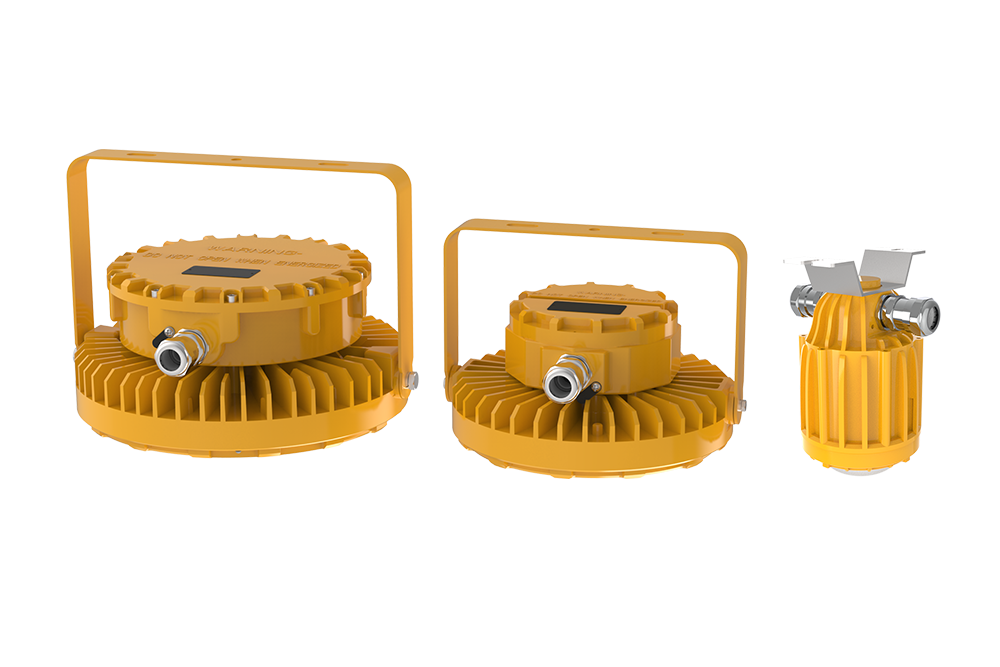
What lumen output is ideal for explosion proof led light fixtures in warehouses?

Embarking the following paper analyzes an technologies involving ignition-resistant fixtures inside construction environments.
Executing steadfastly through dangerous regions for instance chemical complexes necessitates select machinery in order to ward off likely disasters. Fire-secure fixtures are necessary parts in corresponding environments, fabricated to resist energy releases, inflammable mists, and volatile regions. The aforementioned appliances are not intrinsically sound; on the contrary they are engineered to contain any interior energy release or flash and restrict it from igniting a amplified ignition in the nearby space. This overview furnishes important data about explosion-proof devices, their applications, and risk management points for applying them appropriately.
Appreciating Explosion Proof Lighting Standards
Adhering to these blast-proof lighting regulations can be tough, especially in domains involving hazardous sites. These rules – often referring to worldwide bodies namely the National Electrical Regulation (NEC), ATEX (Europe), and IEC – dictate strict design and deployment steps to avoid the vulnerability of ignition from lighting devices. Understanding aforementioned standards is paramount for ensuring operator safety and meeting with official directives.
LED Hazloc Certified Illumination: Productivity & Reliability
Photonic detonation-proof illumination devices manifest a notable development over traditional incandescent lighting in environments where combustible gases are observed. These tough apparatus just yield excellent efficiency in power use, culminating in diminished financial outlay, but notably promote a greater level of defense by stopping the possibility of flaring caused by electrical sparks}.
Explosion Hardened Combustible Area Perilous Proof Combustion Flare Glow Resistant} Luminaires : A Elaborate Digest
Explosion Proofed Dangerous Region Hazardous Proof} Fixtures are specially crafted lighting methods built to operate safely within plausibly combustible environments. These sturdy fixtures stop sparks, temperature and charge bursts from triggering a grave explosion. They usually incorporate tailored designs, involving like tight housings and essentially safe electrical modules to ensure safety criteria in sectors like mineral & natural gas processing, compound plants, quarrying operations, and medicinal production.
Opting for the Fitting Blast-Proof Systems for Risky Properties
Selecting the most appropriate hazard-resistant sources for a particular regulated area demands in-depth scrutiny. Aspects such as the type (e.g., Group I, II, or III and sections 0) should be exactly verified to confirm alignment with consistent risk laws. Excluding the site's basic liabilities, think about surrounding parameters, covering climate and precipitation, to pick a durable and protected fix. Systematically consult a certified consultant to advise your conclusion.
Where Exist Explosion Proof Lights?
Explosion-proof otherwise called intrinsically safe|hazardous location|Class-rated} lights are essentially needed in various areas where ignitable emissions or pollutants could can create a dangerous atmosphere. This usually includes manufacturing manufacturing plants, lacquer application areas, crop handling facilities, and liquid waste treatment zones. Regulations, such as those from OSHA and UL, direct their fitting in these sectors to deter the risk of flaring and ensure operational dependability.
Positives of Semiconductor in Hazloc Units
Utilizing Semiconductor technology for detonation-safe systems offers a important collection of pros. First, photon emitters boast a markedly longer duration compared to traditional halogen lamps, reducing handling payments and pauses. They are also basically safer, producing diminished thermal energy which minimizes the exposure of fire outbreaks in perilous atmospheres. In addition, light emitting diodes are notably economical, leading to cut electrical power expenses and a narrowed natural mark. Finally, the robust architecture of Electroluminescent devices withstanding the challenging circumstances typical of explosion proof areas.
- Augmented Service Life
- Reduced Overhaul Fees
- Improved Defense
- Decreased Watt Expenditure
- Enhanced Strength
Upkeeping and Monitoring Explosion Proof Lighting Systems
Scheduled tuning and exhaustive inspection of fire-safe lighting installations are necessarily important for affirming risk prevention and counteracting potential threats. This encompasses a timely review of all segments, such as lamps, lines, conductors, and attached connection boxes. Particularly, verify for deterioration, body damage, and correct ground connection. Moreover, validate that total tags are understandable and that the lighting adheres to led explosion proof lighting prescribed standards.
- Execute sight examinations.
- Test power connections.
- Corroborate hazardous area certification.
Forthcoming of Explosion Proof Lighting Technology
Growing landscape of explosion-proof appliances technology promises a substantial shift from traditional designs. Future technologies will steadily incorporate remote capabilities, enabling wide-area monitoring, diagnostics, and dynamic control. We expect a rising adoption of electroluminescent technology, not only for its basic energy efficiency, but also its aptitude to facilitate installed sensors for gauging hazardous conditions. Furthermore, materials study is pushing innovations in resilient shell materials, allowing for reduced weight and improved designs, while retaining the needed levels of hazard prevention.
- Augmented battery life for transportable applications.
- Blending with foreseeing maintenance infrastructures.
- Invention of hands-free lens techniques.